Waterproof vs Water-Resistant Seat Covers: What's the Real Difference?
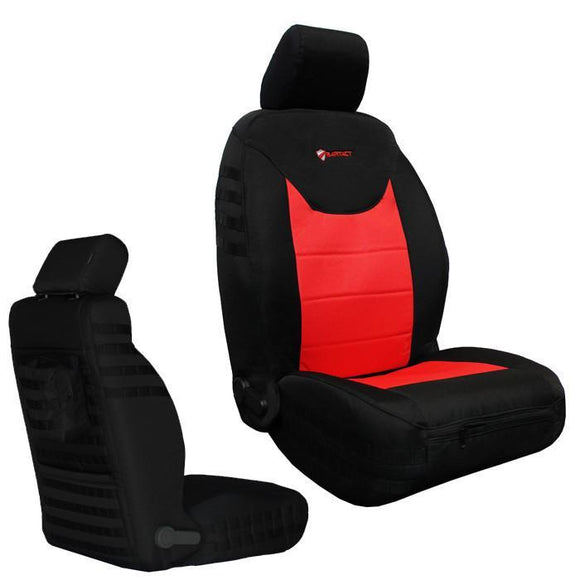
Every seat cover listing mentions waterproof or water-resistant. But they're not the same thing — and the marketing around them is intentionally vague. A cover that's "water-resistant" might handle a spilled coffee but fail in a downpour. A "waterproof" cover might only be waterproof on the facing, not the underside. Understanding the real difference changes which covers will actually protect your seats in the conditions you drive.
This guide breaks down what these terms actually mean, how they're tested, which performs better in real-world use, and what to look for in the fine print.
Waterproof vs Water-Resistant: Technical Definitions
The technical difference is straightforward, but marketing has blurred it:
| Term | Technical Definition | Real-World Meaning |
|---|---|---|
| Waterproof | Blocks water completely under sustained pressure/immersion | Water won't penetrate under any normal driving condition |
| Water-Resistant | Repels water but will eventually allow penetration under pressure/time | Handles splash and light rain; fails in heavy rain or when wet for hours |
The legal definition matters because "waterproof" is heavily regulated in most industries. A product can't legally claim waterproof status without meeting specific testing standards. "Water-resistant," on the other hand, is vaguer — and that's intentional. Many manufacturers use "water-resistant" as a hedge because it avoids regulatory claims they can't back up.
How Water-Resistance is Actually Measured
When manufacturers test their seat covers, they use hydrostatic pressure tests — essentially spraying water at a cover and measuring how much pressure it takes before water penetrates. The results are measured in millimeters of water column (mm WC), which you might see in technical specs.
| Pressure (mm WC) | Real-World Equivalent | Seat Cover Performance |
|---|---|---|
| 100 mm WC | Light rain / splash | Water-resistant; handles casual use |
| 300 mm WC | Moderate rain / sustained spray | Water-resistant; holds for light to moderate conditions |
| 1000+ mm WC | Heavy rain / high-pressure spray | True waterproof; sustained exposure safe |
Real-world note: Most major brand seat covers claim 300–500 mm WC (moderate water-resistance) on the facing fabric alone. True waterproof (1000+ mm WC) is rare and expensive. The confusion happens because marketing doesn't always distinguish between facing fabric and backing — a cover might have a 300 mm WC face but zero waterproofing on the backing.
The Real Culprit: Backing Material
Here's where the distinction matters most. A water-resistant face fabric is only half the story. If the underside (backing) of the cover isn't waterproof, water will soak through to the seat foam in minutes.
Facing fabric (top): This is the part you see and sit on. Most seat covers use polyester or Cordura with water-resistant coatings. This repels water on contact.
Backing material (bottom): This touches the seat directly. If it's not waterproof, water migrates through the face fabric, through the cover structure, and into the seat foam. This is the failure point most covers don't address.
The right setup: A truly water-resistant seat cover has a water-resistant face AND a waterproof backing. Polyurethane (PU) backing is the standard for real waterproofing. Neoprene (wetsuit material) is naturally waterproof on both sides.
Water-Resistant vs Waterproof: Use Cases
Water-Resistant Covers (300-500 mm WC)
What they handle:
- Spilled coffee or water bottles
- Light to moderate rain (less than 1 hour continuous)
- Damp dirt and mud
- Occasional spraying from a hose
- Sweat and light moisture
What they don't:
- Heavy downpours lasting hours
- Direct high-pressure spray (power wash, aggressive hose)
- Soaking wet dogs or wet camping gear
- Salt water or corrosive moisture
- Extended submersion or extreme humidity
Best for: Daily drivers in dry climates, casual hunters, construction workers dealing with dust and light moisture. Most popular seat covers fall here.
Waterproof Covers (1000+ mm WC)
What they handle:
- Heavy rain, extended exposure
- High-pressure spray and power washing
- Wet dogs, soaked camping gear, mud
- Salt water environments
- Extreme humidity
- Near-submersion conditions
What they trade off:
- Higher cost (typically 2-3x more expensive)
- Heavier material (less breathable, more heat-trapping)
- Fewer aesthetic options (neoprene or heavy-duty PU backing)
- Potential condensation in hot, humid climates
Best for: Serious hunters in wet climates, guide vehicles, fleet trucks, commercial use, overlanders, water sports athletes. Neoprene and heavy-duty Cordura covers with full PU backing fall here.
Key Brands and Their Real Water-Resistance Specs
Bartact Tactical (Water-Resistant, Strong Backing)
Bartact uses UV-protected polyester or 1000D Cordura nylon on the face (300–400 mm WC water-resistance) with a polyurethane backing. This is a hybrid approach: not full waterproof, but the PU backing prevents water from soaking through to the seat foam. Effective for 80% of users who need solid water-resistance without the weight and cost of neoprene.
Smittybilt G.E.A.R. (Water-Resistant, Basic Backing)
Smittybilt uses 600D polyester with a waterproof backing on their G.E.A.R. line. Similar to Bartact in approach — strong on water-resistance but not extreme waterproofing. Good for casual use and light moisture, but not designed for extended wet exposure.
Wet Okole Neoprene (True Waterproof)
Wet Okole uses neoprene — the same material as wetsuits. Neoprene is naturally waterproof on both sides because it's designed to seal water out. This is genuine, full waterproofing. The tradeoff: neoprene doesn't breathe, so it can trap heat and moisture in hot climates. Better for wet, cool climates like the Pacific Northwest or coastal areas.
Coverking Ballistic (Water-Resistant with Strong Backing)
Coverking Ballistic uses 1000D ballistic nylon with a polyurethane backing. Similar to Bartact in approach — excellent water-resistance but not extreme waterproofing. Designed for durability first, water-resistance second.
Real-World Scenarios: Which Type Works?
| Scenario | Water-Resistant Enough? | Better Choice |
|---|---|---|
| Daily commute in dry climate | Yes | Water-resistant cover (Bartact, Smittybilt, Coverking) |
| Occasional hiking/camping, light rain exposure | Yes | Water-resistant cover with PU backing |
| Construction work with mud and moisture | Marginal | Water-resistant cover; plan to wipe dry |
| Hunting in Pacific Northwest (rain, mud, wet dogs) | No | Waterproof cover (Neoprene or heavy PU) |
| Guide vehicle or commercial use (heavy exposure) | No | Waterproof cover; neoprene or full PU |
| Desert overlanding (dust, rare hard rain) | Yes | Water-resistant cover |
| Coastal fishing or water sports (salt spray, wet gear) | No | Waterproof neoprene cover |
What to Look for in Product Specs
When evaluating a seat cover's water protection, ignore marketing language and look for these specifics:
- Backing material: Is it polyurethane (PU), neoprene, or unspecified? Unspecified usually means it's not waterproof.
- Face fabric rating: Does the listing include mm WC (millimeters water column) or hydrostatic pressure rating? If not, it's probably just water-resistant.
- Seam construction: Are seams sealed or just stitched? Sealed seams (bar tack stitching with waterproof tape) are necessary for true waterproofing.
- Airbag compatibility: Real waterproof covers are thicker and may have issues with side-bolster airbags if not engineered carefully.
- Return policy: If a cover claims waterproof but the company doesn't stand behind it for returns, that's a red flag.
The Bottom Line: Which Do You Actually Need?
Most drivers need water-resistant, not waterproof. A solid water-resistant cover with a polyurethane backing (300–500 mm WC on the face) handles the vast majority of real-world use: spills, light rain, casual outdoor activity, and general moisture.
Go waterproof (neoprene or full heavy-duty PU backing) only if you consistently expose your seats to heavy water, mud, salt spray, or extended wet conditions. The extra cost and weight aren't justified for occasional use.
Safe choice for most: Bartact or Smittybilt G.E.A.R. — both use water-resistant face fabric with true polyurethane backing.
If you're in a wet climate or spend serious time in the field: Wet Okole neoprene or a professional-grade waterproof cover.
Find water-resistant or waterproof seat covers for your truck
Find Covers For Your Vehicle → Why Tactical? →Related reading: Neoprene vs. Cordura · Are Tactical Seat Covers Worth It? · Tactical Seat Cover Maintenance