Are Tactical Seat Covers Worth It? A Real Cost Analysis
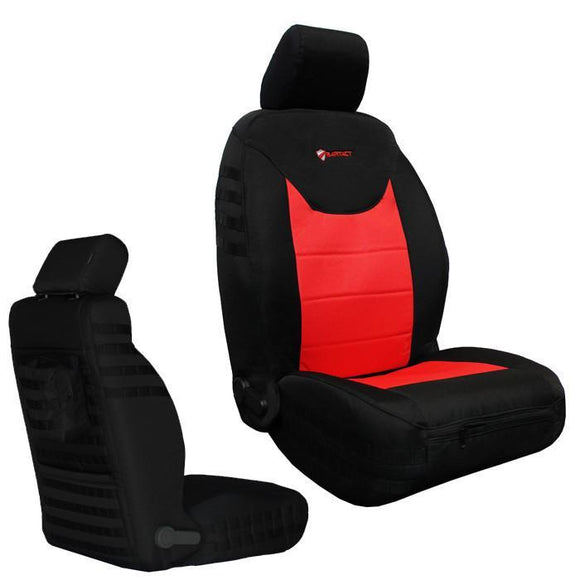
Walk into any auto parts store and you can grab a set of neoprene seat covers for $80. Walk over to Bartact's site and a single pair of front tactical covers runs $470. That's almost six times the price for what looks, at a glance, like the same product wrapped around the same seat.
So what are you actually paying for? And more importantly — is it worth it for your truck, your use case, your wallet?
This isn't a sales pitch. There are plenty of drivers who shouldn't buy tactical covers. Below is the honest cost breakdown so you can decide.
The Sticker Shock: What Each Tier Actually Costs
Before we run any math, here's the realistic price spread across the three main categories of seat covers on the market right now:
| Tier | Brands (examples) | Price (front pair) |
|---|---|---|
| Budget neoprene | FH Group, Motor Trend | $60-$120 |
| Mid-tier neoprene/poly | Wet Okole, Rough Country, Diver Down | $200-$400 |
| Tactical / custom-fit | Bartact, Smittybilt G.E.A.R., Coverking Ballistic | $300-$650 |
For context, Bartact's lineup specifically (verified pricing): Baseline Performance covers run $300/pair, Tactical with MOLLE on most JL Wranglers and JT Gladiators is $470/pair, and the higher-trim Mojave/392/Rubicon and Full Custom builds run $490-$650/pair depending on options. Smittybilt's G.E.A.R. covers are priced per seat rather than per row, so doubling the listed sticker is the actual front-pair cost.
Cost Per Year: The Number That Actually Matters
A $90 cover that lasts 18 months is more expensive than a $470 cover that lasts 8 years. Most buyers run the math wrong because they only look at the upfront number.
Here's a realistic cost-per-year comparison based on common lifespan ranges for each tier in daily-driver use:
| Cover Type | Upfront Cost | Typical Lifespan | Cost Per Year |
|---|---|---|---|
| Budget neoprene ($90) | $90 | 1-2 years | $45-$90 |
| Mid-tier neoprene ($300) | $300 | 3-5 years | $60-$100 |
| Tactical Cordura/poly ($470) | $470 | 7-10+ years | $47-$67 |
Lifespan numbers are based on owner reports across forums and brand-specific reviews — not a formal lab test. Outdoor exposure, dog claws, kids, and tools in the back will all push these numbers down. Garage-kept commuter vehicles will push them up.
The point: when you stretch the math out over the life of the cover, tactical covers are roughly the same per-year cost as decent neoprene — and cheaper per-year than budget covers, because you replace the cheap ones constantly.
What You're Actually Buying at the Tactical Tier
Per-year math only matters if the more expensive option is genuinely a longer-lasting product. Here's what that extra money is paying for at the Bartact-tier price point:
- UV-protected polyester and/or 1000D Cordura nylon option with waterproof polyurethane backing and high-grade foam behind it — built to handle sun exposure, abrasion, and moisture
- Real MOLLE panels with PALS webbing on Tactical models — load-rated to actually carry gear, not decorative
- Real Bar Tack stitching at every stress point (the brand is literally named after this)
- SRS airbag compatible — covers the side-airbag deployment seam correctly so the airbag still works
- Custom-fit patterns for every supported vehicle — no universal sizing, no slipping or bunching
- Made in Temecula, California — Berry Amendment compliant for buyers who care about U.S.-sourced materials
None of those things are "marketing fluff." They're the difference between a cover that fits like a glove for a decade and a cover that starts pilling, sliding, or splitting at the seams within a year or two.
Resale Value: The Hidden Return
This one rarely shows up in cost comparisons, but it's real: a clean factory interior is worth real money at trade-in or private-party sale, especially on Wranglers, Gladiators, Tacomas, 4Runners, and Broncos — vehicles that hold their value better than average.
Anecdotally, dealers and private buyers will knock $500-$1,500 off a sale price for visibly worn or stained seats on a $30,000+ truck. A set of covers that prevents that wear pays for itself once at resale, even before factoring in daily comfort.
If you keep your vehicle 5+ years and resell privately, tactical covers often end up being free in net terms — or close to it.
Who SHOULD Buy Tactical Covers
- Anyone with dogs, kids, tools, or muddy gear hitting the seats regularly
- Overlanders, hunters, and trail rigs that need MOLLE-mounted gear access
- Daily drivers in sunny climates (the UV-protected fabric matters in Arizona/Texas/SoCal sun)
- Anyone who plans to keep the vehicle 5+ years
- Work truck owners who care about tools, dust, and worksite abuse not destroying factory upholstery
- Buyers who care about U.S.-made products and Berry Compliance (Bartact specifically)
Who SHOULDN'T Buy Tactical Covers
- Lease drivers — you're handing the vehicle back; cheap neoprene is fine
- Drivers planning to sell within 12-18 months
- Owners of vehicles with already-trashed seats (cover the symptom, sure, but it's not "preserving" anything)
- Garage-kept Sunday drivers with no kids, no dogs, no off-road use — your factory seats will outlive the cover
- Anyone who genuinely doesn't care about MOLLE and just wants a waterproof barrier — mid-tier neoprene is the better value play
The Honest Verdict
Tactical seat covers are worth it for the people who'd legitimately use the durability and the gear-mounting features — which is most truck, Jeep, Tacoma, and Bronco owners who actually use their vehicles for what they were built for. If your rig sees dirt, water, dogs, kids, or tools on the regular, the cost-per-year math works out in your favor and the resale bump is a bonus.
If you commute to an office in a clean cab and nothing ever touches the seats, the $470 spend doesn't have a good ROI story. Buy a $90 set, replace it every 18 months, move on.
The mistake we see most often is people buying the wrong tier for their actual lifestyle: lease drivers buying $500 tactical covers they don't need, and overlanders buying $90 neoprene that's torn to shreds within a season. Match the product to the use, not the marketing.
Related reading: Neoprene vs. Cordura · Real MOLLE vs. Sewn-On Pouches · Gladiator vs Wrangler Seat Cover Differences