Neoprene vs. Cordura: Which Material is Right for You?
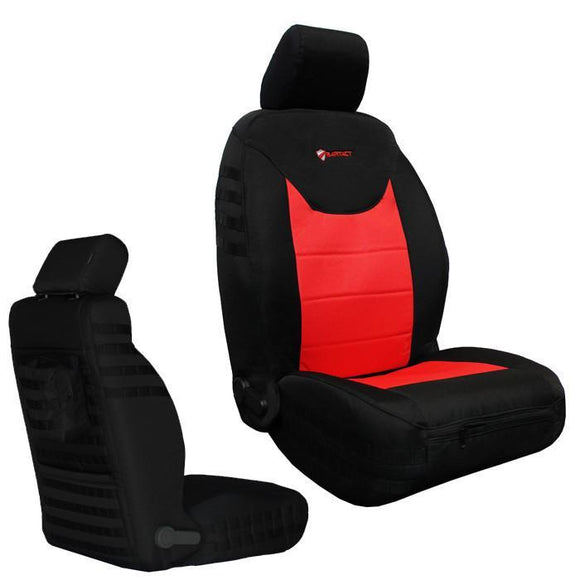
When you start shopping for serious seat covers — not the $30 universal-fit stuff, but real custom-fit protection — you'll quickly land on two materials: neoprene and Cordura nylon. They're fundamentally different materials built for different situations, and choosing the wrong one means you're either overpaying or underprotecting.
Here's everything you need to know to pick the right material for how you actually use your vehicle.
What Is Neoprene?
Neoprene is a synthetic rubber originally developed by DuPont. It's the same material used in wetsuits, which tells you everything about its primary strength: water resistance. Neoprene is naturally waterproof, flexible, and comfortable against skin — even when wet.
In seat covers, neoprene is typically layered — a neoprene core sandwiched between fabric facings. The result is a cover that feels like a high-end wetsuit: soft, slightly stretchy, and very resistant to water penetration.
Neoprene Pros
- Excellent water resistance — repels water, dries quickly, won't absorb moisture
- Comfortable in all temperatures — doesn't get scorching hot or freezing cold
- Soft feel — pleasant to sit on, even in shorts
- Easy to clean — wipe down or hose off
- Good for pets — fur brushes off, drool wipes away
Neoprene Cons
- Less abrasion-resistant — can wear through under heavy trail use
- No tactical features — neoprene doesn't support MOLLE attachment
- UV degradation — can break down over time with constant sun exposure
- Odor retention — neoprene can develop a smell if not dried properly
- Not as puncture-resistant — sharp objects can damage it more easily than woven fabric
What Is Cordura?
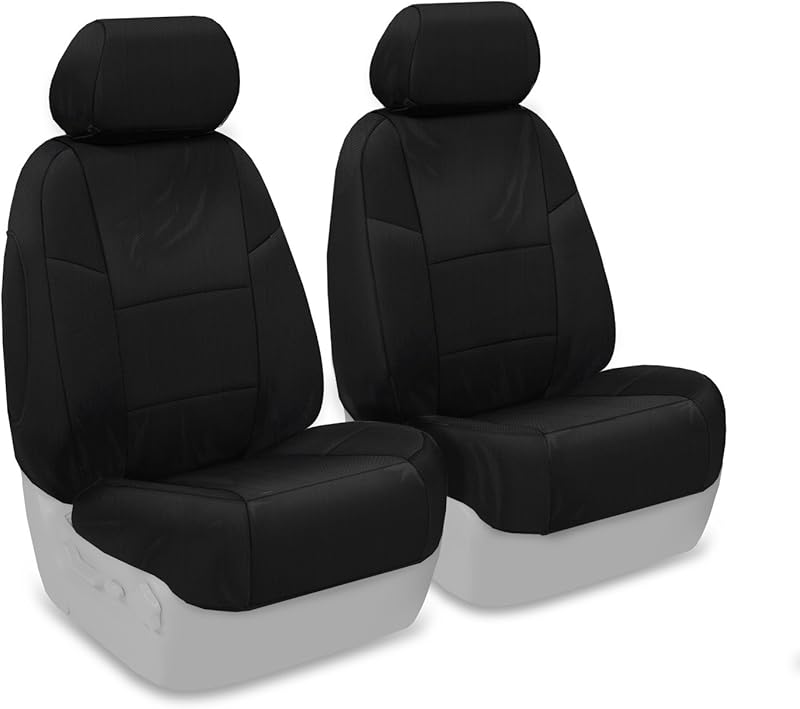
Cordura is a brand name for a family of high-performance nylon fabrics made by INVISTA. When seat cover manufacturers say "Cordura," they typically mean 1000-denier Cordura nylon — a tightly woven fabric that's exceptionally resistant to abrasion, tearing, and punctures.
Cordura was originally developed for military applications. It's used in backpacks, body armor carriers, combat uniforms, and vehicle accessories where durability matters more than anything else. In seat covers, Cordura is usually backed with waterproof polyurethane and paired with high-grade foam for comfort.
Cordura Pros
- Extreme durability — resists abrasion, tearing, and punctures far better than neoprene
- Supports MOLLE/tactical features — the woven structure can anchor PALS webbing
- UV-resistant — holds up to prolonged sun exposure better than neoprene
- Long lifespan — Cordura covers can last years under heavy use
- Professional appearance — looks sharp, doesn't show wear quickly
Cordura Cons
- Stiffer feel — not as soft or stretchy as neoprene
- Can feel warm — in direct sun, Cordura can get hotter than neoprene
- Higher price point — quality Cordura covers typically cost more
- Water-resistant, not waterproof by itself — needs PU backing for full waterproofing
Head-to-Head Comparison
| Factor | Neoprene | Cordura |
|---|---|---|
| Water Resistance | ⭐⭐⭐⭐⭐ Excellent | ⭐⭐⭐⭐ Very Good (with PU backing) |
| Abrasion Resistance | ⭐⭐⭐ Good | ⭐⭐⭐⭐⭐ Excellent |
| Tear/Puncture Resistance | ⭐⭐ Fair | ⭐⭐⭐⭐⭐ Excellent |
| Comfort | ⭐⭐⭐⭐⭐ Very comfortable | ⭐⭐⭐⭐ Good (with foam backing) |
| UV Resistance | ⭐⭐⭐ Moderate | ⭐⭐⭐⭐⭐ Excellent |
| MOLLE Compatible | ❌ No | ✅ Yes |
| Pet Friendly | ⭐⭐⭐⭐⭐ | ⭐⭐⭐⭐ |
| Longevity | ⭐⭐⭐ 3-5 years | ⭐⭐⭐⭐⭐ 5-10+ years |
When to Choose Neoprene
Neoprene is the right call if:
- You regularly get your seats soaked — beach trips, kayaking, surfing, fishing
- You have dogs that ride in the car frequently
- Comfort against bare skin is a priority (shorts, swimsuits)
- You're on a moderate budget
- You don't need tactical storage or MOLLE panels
Best neoprene brands: Rough Country, Diver Down, and Wet Okole all make quality neoprene covers for specific vehicle models.
When to Choose Cordura
Cordura wins when:
- You're off-road often and gear/equipment contacts your seats
- You want MOLLE panels for modular storage
- Long-term durability matters more than softness
- Your vehicle is parked outdoors in sun regularly
- You carry tools, equipment, or anything with sharp edges
Best Cordura brand: Bartact offers 1000D Cordura nylon as an upgrade option on their custom-fit covers, backed with waterproof polyurethane and high-grade foam. They also have a UV-protected polyester base option that sits between neoprene and Cordura in the durability spectrum. Coverking Ballistic also makes Cordura-type covers without the tactical features.
Can You Get Both?
Sort of. Some manufacturers use polyester with waterproof backing as a middle ground — more durable than neoprene, more comfortable than straight Cordura. Bartact's base covers use UV-protected polyester with waterproof polyurethane backing and high-grade foam, which gives you solid water resistance plus much better abrasion resistance than neoprene. Then you can upgrade specific panels to 1000D Cordura nylon where you need maximum toughness.
The Bottom Line
Wet lifestyle → Neoprene. If your primary concern is water — whether from outdoor sports, dogs, kids, or weather — neoprene will make your life easier.
Hard-use lifestyle → Cordura. If you're running trails, hauling gear, or want tactical storage, Cordura is the material that will still look good in five years.
Not sure which fits your situation? Our vehicle-specific reviews break down the best options for your exact make and model.
Find the right material for your vehicle
Search by Year, Make & Model →