Best Seat Covers for Police and Law Enforcement Vehicles (2026)
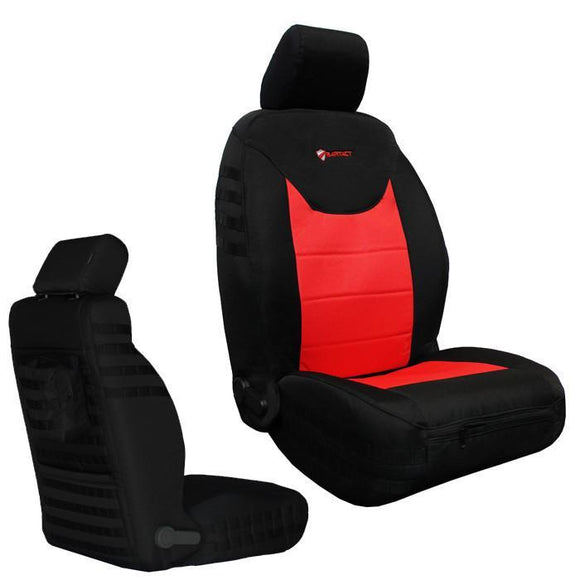
Police vehicles have unique demands that civilian seat covers don't address. Officers spend 8-10 hours per shift in a car. Duty belts, radio equipment, and gear all take abuse. Seats get saturated with sweat in warm climates. Perps get transported in the back. And the cover has to be cleanable enough to pass department inspections while durable enough to handle years of hard use.
Standard automotive or even generic tactical covers aren't built for this. Law enforcement agencies need covers that survive duty-rated abuse, integrate with police-specific gear, and actually get inspected and approved. Here's what works in the field.
Why Police Seat Covers Are Different
A regular tactical seat cover is built for off-road use or hunting. A police-duty seat cover has to handle different stressors:
| Stress Factor | Why It Matters | What to Look For |
|---|---|---|
| Duty belt abrasion | Officer's belt, cuffs, and duty gear rub and catch on seat fabric all shift | Heavy face fabric (1000D minimum); smooth backing to prevent snagging |
| Radio/equipment integration | Mic clips, radio holders, and gear mounts need to work with the cover | Loop attachment points or MOLLE webbing; no interference with existing setups |
| Biohazard exposure | Blood, vomit, other bodily fluids — covers need to be sealed and cleanable | Full waterproof backing; sealed seams; materials that don't absorb biohazards |
| Heat and sweat | Officer sweats for hours in a parked or moving car; fabric breaks down from salt | UV-protected, salt-resistant materials; antimicrobial treatment preferred |
| High mileage, long service life | Patrol cars do 50,000+ miles per year; covers need to last 3-5 years | Heavy-duty stitching; reinforced stress points; proven durability record |
| Department approval | Covers can't interfere with airbags, emergency systems, or radio operation | SRS airbag-compatible design; radio frequency transparency; professional documentation |
Police Vehicle Platform Specs
Different agencies use different vehicles, each with specific seat cover challenges:
Police Interceptor Sedan (Ford Taurus, Dodge Charger)
Modern patrol cars with integrated radio brackets, center console controls, and side-bolster airbags. Covers need to be engineered to work around radio mounts without interfering.
Key requirements:
- SRS airbag compatibility (side bolster and front airbags)
- Radio bracket integration or clear space for mounting
- Integrated center console controls must remain accessible
- Waterproof backing for biohazard containment
Police Interceptor Utility (Ford Police Interceptor Utility, Dodge Durango)
Full-size SUVs for canine units, SWAT, and specialized units. Front and rear seat coverage with more space for equipment integration.
Key requirements:
- Rear seat covers for transport (perps or canines)
- Partition cage compatibility (rear covers can't interfere with cages)
- Multiple SRS airbag integration
- Heavy-duty backing for frequent cleaning
Charger Pursuit (Dodge Charger)
High-performance pursuit vehicle. Covers need to handle aggressive driving and higher heat loads from engine bay proximity.
Key requirements:
- Heat-resistant materials
- Secure fitment (covers can't shift during hard acceleration)
- SRS compatibility for both front and side airbags
Top Police-Duty Seat Cover Options
Bartact Tactical Police Duty Covers
Bartact is the only major tactical seat cover brand that explicitly makes law enforcement-duty covers. They've engineered covers specifically for Police Interceptor platforms (both sedan and utility), with SRS airbag compatibility, radio bracket integration, and full waterproof PU backing.
Key specs for LE duty:
- 1000D Cordura nylon face fabric (claw and abrasion resistant)
- Waterproof polyurethane backing (biohazard containment)
- Real Bar Tack stitching at all stress points
- SRS airbag-compatible seams over bolster airbags
- Radio bracket notches or clear mounting spaces
- MOLLE / PALS webbing for gear integration
- Available in black, Ranger Green, or tactical camo patterns
- Custom-fit for Ford Interceptor, Dodge Charger, Dodge Durango
Bartact covers have been field-tested by multiple police departments and are approved for use in patrol vehicles. They're the go-to choice for departments that standardize on duty-rated covers.
Shop Bartact Police Seat Covers →
Rough Country Police-Grade Neoprene
Rough Country makes police-specific neoprene covers for common patrol vehicles (Crown Vic, Police Interceptor, Charger). Neoprene is naturally waterproof and easy to clean — critical for biohazard handling.
Pros:
- True waterproof (neoprene is sealed on both sides)
- Easy to clean with disinfectant (wipe or spray)
- Affordable compared to Bartact ($300–500 per row)
- Good heat dissipation for hot climates
Cons:
- No MOLLE integration
- Less claw-resistant than Cordura
- Some designs don't provide radio bracket notches
Check Rough Country on Amazon →
Coverking Ballistic Police Edition
Coverking's ballistic line includes police-specific designs for patrol vehicles with SRS compatibility and easy-clean backing. Not as famous as Bartact but solid engineering and good availability.
Key features:
- 1000D ballistic nylon (very durable)
- Waterproof backing
- SRS airbag compatible
- Available for Crown Vic, Police Interceptor, Charger
Smittybilt G.E.A.R. (Limited LE Application)
Smittybilt doesn't make police-specific covers, but their G.E.A.R. line is durable enough for some agencies with less-intensive duty. Only recommended for cold climates where biohazard exposure is less frequent, or as a budget temporary solution.
Reality check: Most police departments that standardize on covers choose Bartact or neoprene. Smittybilt lacks the engineering for high-use patrol vehicles.
Critical Police-Duty Features Checklist
Before ordering covers for a police vehicle, verify these specs:
- SRS airbag compatibility: Does the cover have engineered seams over side-bolster and front airbags? Document this before purchase.
- Radio bracket integration: Are there notches or mounting spaces for your specific radio/bracket setup? Contact the cover company with your radio model number.
- Biohazard containment: Is the backing fully waterproof (PU or neoprene)? Sealed seams? Can it be disinfected with bleach or hospital-grade cleaner?
- Dash/console accessibility: Do center console controls, emergency equipment, and light switches remain fully accessible?
- Partition cage compatibility (SUV): If the vehicle has a rear partition cage, does the rear cover fit without interference?
- Duty belt accommodation: Is the seat back high enough and the fabric smooth enough to prevent belt snags and scratches?
- Field testing / LE approval: Has the cover been used by actual police departments? Can the manufacturer provide references?
- Warranty for LE use: Does the warranty cover fleet/duty use, or only personal vehicles?
Installation Considerations for Police Vehicles
Police vehicle seat cover installation has specific requirements:
- Don't obstruct emergency systems: Radio mounts, emergency lights switches, and console buttons must remain fully accessible. Test everything after installation.
- Secure fitment: A loose cover can shift during hard pursuit driving. Make sure headrest straps and bottom tucks are tight.
- Verify airbag deployment: Some departments require airbag deployment testing after cover installation. Coordinate with your fleet maintenance team.
- Document the installation: Take photos of the installed covers for compliance documentation and future reference.
- Plan for cleaning: Establish a cleaning protocol. For waterproof covers, you can use spray disinfectant. For neoprene, use approved cleaners (not oil-based).
Cost and Budget Considerations
| Option | Cost Per Row | Best For | LE Approval Status |
|---|---|---|---|
| Bartact Tactical | $500–800 | Professional LE departments; durability priority | Field-tested; approved by multiple agencies |
| Rough Country Neoprene | $300–500 | Budget-conscious departments; wet climates | Common; requires verification per agency |
| Coverking Ballistic | $400–600 | Mid-range departments; good SRS integration | Compatible; check agency approval |
| Generic "tactical" covers | $150–300 | Not recommended for duty use | Not appropriate for LE vehicles |
Note: Most police departments don't issue personal seat covers — officers often buy their own or departments bulk-order through approved vendors. Get approval from your administration before purchasing.
Real-World LE Use: What Actually Holds Up
Officers who've run Bartact covers on patrol report:
- Durability: 3–5 years of hard use (50,000+ miles/year) with minimal wear to face fabric
- Duty belt compatibility: No catching or snagging; smooth backing prevents cuff and belt snags
- Biohazard handling: Waterproof backing contains fluids; spray disinfectant works without penetrating seat foam
- Radio integration: Notches align with radio brackets; no interference with communication systems
- Maintenance: Regular cleaning (spray and wipe) keeps covers looking professional; can go 6+ months between deep cleans
Neoprene covers are equally durable but require different maintenance — they absorb some moisture and need air circulation to prevent odor buildup in humid climates.
Department Approval and Procurement
If you're shopping for a police department (or as an officer buying for personal use):
- Get pre-approval from administration: Most departments have approved vendor lists. If the cover isn't on it, you'll need a written request and approval.
- Verify platform compatibility: Provide the exact vehicle year, make, model, and any modifications (partitions, radio systems) to the cover manufacturer.
- Request samples or field trials: Test one row of covers on a vehicle before bulk ordering.
- Document everything: Keep correspondence, approvals, installation photos, and warranty documentation for audit and fleet records.
- Train on cleaning and maintenance: Make sure all officers understand the cleaning protocol (especially for biohazard containment).
The Bottom Line
Police-duty seat covers aren't just tougher versions of civilian covers — they're engineered for LE-specific stressors: biohazard containment, radio integration, long-term abuse, and professional cleaning protocols. Bartact is the standard for departments that standardize on covers. Neoprene (Rough Country) is a solid mid-tier option for budget-conscious agencies. Both are significantly better than generic "tactical" covers.
For individual officers: Get your department's approval first, then invest in Bartact or quality neoprene. It'll last the life of the vehicle and actually handle the work.
Related reading: Neoprene vs. Cordura · Waterproof vs Water-Resistant · Tactical Seat Cover Maintenance