How to Choose Seat Covers With Heated Seats (Without Killing the Heat)
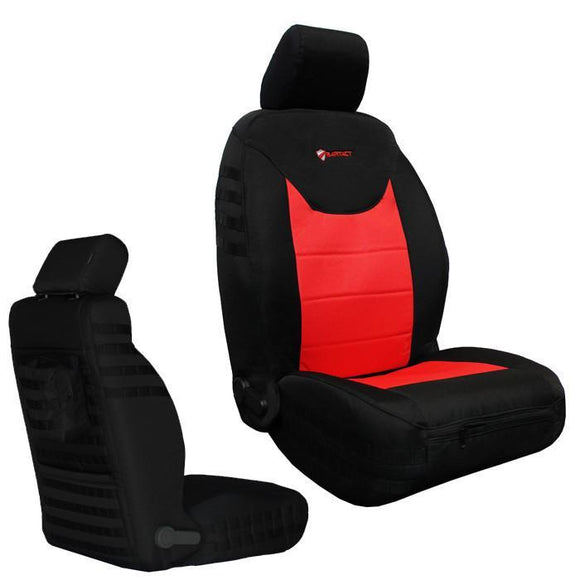
Heated seats are the one truck feature most owners refuse to give up in winter. So when it comes time to protect the upholstery, the obvious question is: will a seat cover block the heat? The answer is — it depends entirely on what you buy. The wrong cover turns a seat that reaches full warmth in 90 seconds into one that barely feels warm after five minutes. The right cover passes heat through so effectively you'd never know the cover was there.
This guide breaks down the physics, the materials, and the specific brands that get it right — so you can protect your seats without sacrificing the feature you paid for.
Why Most Seat Covers Kill Heated Seat Performance
Heated seats work by running a resistive heating element through a thin layer embedded in the seat foam. That element warms the foam, and the foam conducts that heat upward through the seat covering to your body. The entire system is designed around the stock upholstery — whether that's perforated leather, cloth, or synthetic material — which is thin enough that the heat passes through quickly.
When you add a seat cover, you're adding an insulating layer between the heating element and you. How much that matters depends on two variables:
- Material thermal conductivity: Dense closed-cell materials like neoprene trap air in their structure and act as genuine insulation — which is exactly what you don't want sitting between a heating element and your back. Thinner, more permeable fabrics like canvas and nylon conduct heat more efficiently.
- Cover thickness: More layers = more insulation = more heat loss before it reaches you. A heavy quilted cover with foam padding can absorb so much heat that the seat never warms you properly. Thin, unpadded covers pass heat with minimal loss.
Ventilated seats (active cooling through the seat cushion) face an even harder problem: airflow blockage. A cover that completely seals the seat surface prevents the ventilation ports from moving air at all, defeating the system entirely. Permeable fabrics with mesh-like structures handle this much better than solid-face materials.
The neoprene problem: Neoprene is the most popular waterproof seat cover material — and the worst possible choice if you have heated or ventilated seats. Its closed-cell structure is thermal insulation by design. Wet suits are made from it because it traps body heat. Put it between your heating element and your body and you've insulated yourself out of your own seat feature. If you have heated seats, avoid neoprene entirely.
What to Look for — The Four Rules
You can evaluate any seat cover for heated-seat compatibility using these four criteria:
- Material type: Canvas, nylon, and perforated leather alternatives are the right call. Neoprene, thick quilted polyester, and memory foam padding layers are not.
- Thickness: Thin is better. A single-layer cover passes heat better than a cover with added padding. If the product description says "memory foam padding" or "extra cushion" — that extra layer is eating your heat.
- Permeability: For ventilated seats specifically, look for woven fabrics or perforated materials. A cover with zero airflow defeats active ventilation entirely.
- Explicit compatibility labeling: The best brands call out heated/ventilated seat compatibility directly in their product listings. When a brand doesn't mention it, assume worst-case until you verify.
#1 — Covercraft Carhartt SeatSaver
Best Overall for Heated Seat Compatibility
The Covercraft Carhartt SeatSaver earns the top spot here for the same reason it earns top spots in most other categories: the duck weave canvas construction is genuinely thin and permeable in a way that works well with heated seats. The material conducts heat efficiently — it's a single-layer woven fabric without foam padding or insulating backing. Most owners report no meaningful reduction in heated seat warmth through the Carhartt canvas, and the heat-up time increase is minimal (typically 30–60 seconds longer to reach full warmth, depending on ambient temperature).
- Material: Carhartt duck weave canvas — single layer, no foam padding
- Heated seat impact: Minimal — canvas conducts heat well, thin profile
- Ventilated seat impact: Low — woven canvas allows moderate airflow
- Fitment: Custom-fit per year, make, model, and trim level
- Machine washable: Yes
- Made in USA: Yes
The custom fitment is particularly relevant for heated seat vehicles. A poorly-fitting universal cover bunches under you, creating an inconsistent layer between the heating element and your body — some spots covered by one layer, others by two or three where the fabric folds. Covercraft's custom patterns lie flat across the seat surface, giving you consistent, predictable heat transfer across the entire heating zone.
Covercraft also explicitly states heated/ventilated seat compatibility in their product listings for the SeatSaver line, which is a meaningful signal: brands that test and certify this are more trustworthy than brands that stay silent on it.
#2 — Coverking Ballistic Tactical
Best for Heated Seats + Maximum Durability
Coverking's 500D ballistic nylon is the toughest material in the consumer seat cover market, and it happens to be reasonably compatible with heated seats. The woven nylon face is a single layer — no foam padding — and the urethane backing, while adding waterproofing, doesn't create the same insulating barrier that neoprene does. Heat passes through more slowly than through bare canvas, but significantly better than through neoprene.
- Material: 500D ballistic nylon face with urethane backing
- Heated seat impact: Moderate — urethane backing slows conduction slightly more than canvas; most users don't notice at moderate temperatures
- Ventilated seat impact: Moderate — urethane backing reduces airflow; active ventilation will feel diminished
- Fitment: Made-to-order custom fit per year and trim
- Machine washable: No — spot clean or hand wash
- Made in USA: Yes (Mooresville, North Carolina)
If your primary concern is durability — abrasion, cut resistance, heavy use — and heated seats are a secondary consideration, Coverking Ballistic delivers on both fronts. If heated seat performance is the top priority, the Carhartt canvas has a slight edge. For ventilated seats, the urethane backing is more limiting; the canvas is the better choice.
#3 — Covercraft SeatSaver (Non-Carhartt)
Best Lightweight Option for Heated and Ventilated Seats
Covercraft's standard SeatSaver line — the non-Carhartt version using Polycotton fabric — is the lightest, most permeable option in their lineup and the best choice if ventilated seat performance is your top priority. The Polycotton weave is noticeably thinner than the duck canvas, which means even better heat transfer for heated seats and better airflow for ventilated seats.
- Material: Polycotton — thinner and more permeable than duck canvas
- Heated seat impact: Minimal — thinnest material in this guide
- Ventilated seat impact: Low — best airflow of any option listed here
- Fitment: Custom-fit per year, make, model
- Machine washable: Yes
- Made in USA: Yes
The tradeoff versus the Carhartt version: the standard Polycotton material is less robust under heavy use. For a daily driver that doesn't go to job sites — someone who wants to protect factory leather or cloth seats from normal wear while keeping their heated/ventilated seat performance intact — the standard SeatSaver is a well-matched tool. For work trucks that take harder abuse, the Carhartt canvas is a better fit.
#4 — Wet Okole Perforated Neoprene
For Heated Seats: Only If You Need Waterproofing Too
Standard neoprene is the wrong choice for heated seats — the closed-cell structure insulates against the very heat you're trying to feel. Wet Okole's perforated neoprene option is an exception worth knowing about. The perforations break up the solid face, creating channels that allow moderate heat conduction and some airflow. It's a compromise, not a full solution, but it makes neoprene workable for heated seats in a way solid neoprene is not.
- Material: Perforated neoprene — custom-blend with hole pattern throughout face
- Heated seat impact: Moderate — significantly better than solid neoprene; not as good as canvas or nylon
- Ventilated seat impact: Moderate — perforations help; still not ideal for active ventilation
- Waterproof: Partially — perforations allow fluid penetration over time; water-resistant rather than fully waterproof
- Fitment: True custom-fit per year and seat configuration
- Made in USA: Yes (Honolulu, Hawaii)
The use case: if your vehicle goes in the water (a boat ramp truck, a fishing rig, a consistently wet environment), you need waterproofing, and you have heated seats, perforated Wet Okole is the best available answer to an awkward problem. For everyone else — if waterproofing isn't a hard requirement — canvas or nylon delivers better heated-seat performance without the compromise.
When ordering from Wet Okole, request the perforated option explicitly. They offer both solid and perforated neoprene, and the default varies by vehicle model. If you have heated or ventilated seats, make sure you're getting the perforated version.
What to Avoid — Materials That Kill Heated Seat Performance
A brief list of what not to buy if you have heated or ventilated seats:
- Solid neoprene: Closed-cell insulation. The heated seat will run but you'll barely feel it. Common offenders: Rough Country, FH Group, and most Amazon-generic neoprene covers. The problem isn't the brand — it's the material. Any solid-face neoprene cover has the same issue.
- Memory foam padding covers: Added foam underneath the cover face is an insulating layer between you and the heating element. Popular in "comfort" and "luxury" seat cover lines — these are the opposite of what you want for heated seat performance.
- Thick quilted polyester: The quilted padding that makes these feel plush in the store is the same structure that absorbs and dissipates heat before it reaches you. If it has visible quilted stitching with puffiness between layers, it's insulating your seat.
- PU leatherette (heavy gauge): Thin PU leatherette (like EKR Custom Fit) is workable for heated seats. Heavy-gauge PU with padding backing is not — the combination of low-permeability surface and padded backing kills heat transfer.
Heated vs Ventilated — Which Is Harder to Accommodate?
Heated seats and ventilated seats have different requirements, and it's worth understanding the difference:
| Feature | How It Works | Cover Requirement | Worst Offender |
|---|---|---|---|
| Heated seats | Resistive element in foam conducts heat upward | Thin, conductive material | Neoprene, memory foam |
| Ventilated seats | Blower moves air through perforated upholstery | Permeable/perforated material | Solid neoprene, leatherette |
| Heated + ventilated | Both simultaneously (luxury vehicles) | Thin AND permeable | Almost anything solid |
If you have both heated and ventilated seats — found in many higher-trim Ram trucks, Chevy Silverados, Ford F-150s, and GMC Sierras — the cover requirements are most demanding. The Covercraft SeatSaver (Polycotton) or the Carhartt version are the best available options for this combination. No cover will fully preserve ventilated seat airflow, but thin, woven fabrics reduce the loss far more than any solid-face material.
Vehicle-Specific Notes
A few heated seat situations that come up repeatedly in real owner forums:
- Ram 1500 with ventilated seats: The Ram's ventilated seat system is more sensitive to cover interference than most trucks — the blower is lower-powered than competitors. Ram owners with ventilated seats should prioritize Covercraft Polycotton or Carhartt over anything with a solid face.
- Ford F-150 with heated/cooled seats (Pro Power Onboard trims): Same principle — the perforated leather stock upholstery is designed for airflow. Replacing it with a solid neoprene cover defeats the cooling system. Woven fabric or perforated neoprene only.
- Toyota Tundra and Tacoma with heated seats: Toyota's heated seats are among the more powerful in the segment — they push more current through the element. This means heated seat performance holds up better under a heavier cover than in some competitors. Canvas and nylon both work well; neoprene is still not recommended.
- Jeep Wrangler Rubicon with heated seats: Jeep heated seats run warm enough that even a moderately thicker cover doesn't kill performance in most climates. That said, the Carhartt SeatSaver remains the best-matched option for Wrangler owners who want both protection and heated seat functionality.
Quick Reference — Compatibility at a Glance
| Material | Heated Seats | Ventilated Seats | Both |
|---|---|---|---|
| Duck canvas (Carhartt SeatSaver) | ✅ Excellent | ✅ Good | ✅ Best choice |
| Polycotton (Covercraft SeatSaver) | ✅ Excellent | ✅ Best choice | ✅ Best choice |
| 500D ballistic nylon (Coverking) | ✅ Good | ⚠️ Fair | ⚠️ Acceptable |
| Perforated neoprene (Wet Okole) | ⚠️ Fair | ⚠️ Fair | ⚠️ Compromise |
| Solid neoprene (Rough Country, etc.) | ❌ Poor | ❌ Poor | ❌ Avoid |
| Memory foam / quilted polyester | ❌ Poor | ❌ Poor | ❌ Avoid |
| Heavy PU leatherette | ⚠️ Fair | ❌ Poor | ❌ Avoid |
Installation Tips for Heated and Ventilated Seat Vehicles
Even the right cover can underperform if installed poorly. A few things to get right:
- Stretch it flat: Any bunching or folding multiplies the effective thickness at that point, creating cold spots. Take the time to pull the cover taut and smooth across the entire seat surface before securing it.
- Don't stack covers: Adding a cover on top of a cover — or adding a seat pad on top of a cover — compounds the insulation problem. One well-fitted cover beats two covers every time.
- Tuck, don't fold: Where the cover has excess material at seat edges or back panels, tuck it into the seat crevices rather than folding it under the seat surface. Folded material under your thighs creates thick insulation zones exactly where the heating element is most active.
- Test before assuming failure: After installing, run the heated seat for 5–10 minutes before concluding it's not working. The cover adds warmup time — a cover that felt like a failure at the 2-minute mark may feel comfortable at the 8-minute mark. Know your new baseline before deciding the cover is a problem.
The Bottom Line
If you have heated seats, the Covercraft Carhartt SeatSaver is the seat cover that works — the custom fit lies flat, the canvas conducts heat efficiently, and it's the cover Covercraft themselves explicitly supports for heated and ventilated seat compatibility. If you also need maximum durability for heavy use, the Coverking Ballistic is a solid second choice that handles heated seats well enough for most climates and use cases.
If you need waterproofing and have heated seats — a genuinely awkward combination — the Wet Okole perforated neoprene is the only waterproof option that doesn't simply eliminate your heated seat experience. Order the perforated version explicitly.
And if someone tries to sell you a neoprene cover for a truck with heated seats, walk away. No amount of marketing language changes the thermal physics.
Find seat covers compatible with your specific trim and heated seat configuration
Search by Year, Make & Model → Why Tactical Covers? →Related reading: Neoprene vs. Cordura: Which Material is Right for You? · UV Damage and Your Seats: Why Material Matters · 5 Mistakes People Make Buying Seat Covers Online · Best Seat Covers for Construction Workers & Tradespeople
Disclosure: TacticalSeats.com contains affiliate links. We may earn a commission on qualifying purchases at no extra cost to you.