Best Seat Covers for Off-Road & Extreme Terrain Use (2026 Guide)
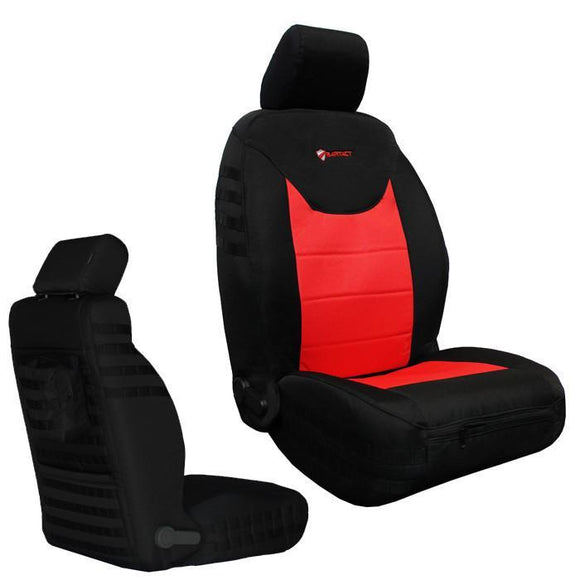
Off-road and overlanding sit in a different universe from daily truck ownership. Your seat covers aren't just protecting against spills and dust — they're protecting against mud, sharp rocks, broken branches, water crossings, and equipment sitting on seats that shouldn't be there. The durability requirements are different, the material selection matters more, and the wrong cover choice will start falling apart at mile 500.
This guide covers what matters for off-road use: material durability, water drainage, ease of cleaning, mounting security, and the specific features that separate a recreational 4x4 cover from one that can handle serious terrain work.
Why Off-Road Seat Covers Are Different
Off-Road vs Daily Driver: The Real Differences
A daily driver's seat cover handles spilled coffee, kids, and the occasional muddy boot. An off-road cover handles all of that plus mud accumulation in deep pockets, water sitting on fabric for hours after a stream crossing, sand embedded in seams, and full-body weight from passengers bracing themselves on seats during steep descents.
The engineering challenges:
- Mud shedding: Mud sticks to soft materials. Hard material sheds mud but can wear through quickly if sharp rocks embed in the surface.
- Water management: A stream crossing soaks a seat cover completely. If the water can't drain out of pockets and seams, the cover stays wet for 24+ hours, leading to mold and smell.
- Abrasion resistance: Off-road equipment (recovery gear, fuel cans, sharp tool edges) sits on seats and cuts through weak material. Ballistic nylon survives; basic polyester doesn't.
- Grip surface: Wet fabric becomes slippery. Off-road covers need texture that keeps passengers anchored when the truck is tilted 35 degrees.
- Installation security: A daily driver's seat cover shifts slightly under normal use. An off-road cover that migrates during a rock crawl can bunch up, reducing coverage and creating trip hazards.
This is why off-road-specific covers command a premium. They're not just reinforced versions of standard covers — they're engineered around the specific failure modes of extreme terrain use.
#1 — Bartact Tactical Seat Covers (Off-Road Optimized)
Best for Serious Overlanding
Bartact built their reputation on making seat covers that survive off-road abuse. The material, stitching, and drainage design are purpose-built for terrain work.
- Material: UV-protected polyester and 1000D Cordura nylon option with waterproof polyurethane backing
- Stitching: Real bar tack reinforcement in stress points (not just thread, but locked, dense stitching)
- Seam design: Raised seams that don't collect water, designed to drain rather than pocket
- MOLLE webbing: PALS webbing across seat backs for strapping gear, recovery equipment, or water bottles
- Installation: Bartact covers use hooks and straps that stay tight even during abuse; they don't migrate
- Drainage: Pockets are shallow and sloped for water runoff
- Price: $600–$800 per vehicle (Jeep Wrangler, Tacoma, 4Runner, etc.)
Why Bartact Works for Off-Road
The 1000D Cordura nylon option is where Bartact shines. Cordura is military-spec material used in combat gear, tactical backpacks, and military vehicle seats. It's abrasion-resistant, doesn't fray easily, and maintains structural integrity under sharp-object contact. A Cordura Bartact cover will survive years of rock crawling, equipment stacking, and extreme weather.
The bar tack stitching is the second critical feature. Standard covers use basic running stitches that fail when stressed. Bar tack is dense, locked stitching — think of it as reinforced seams at every stress point. This prevents seam separation when passengers brace themselves on seats during steep climbs.
The MOLLE webbing is genuine value for overlanders. You can mount carabiners, secure water bottles, attach small gear bags, or strap a recovery kit directly to the seat. It's not just aesthetic — it's functional organization.
#2 — Smittybilt G.E.A.R. Seat Covers
Best for Budget-Conscious Overlanders
Smittybilt G.E.A.R. covers are the secondary choice for off-road work. They're not as rugged as Bartact, but at $200–$250 per seat (note: priced per seat, so a front pair is $400–$500), they offer solid durability at half the cost.
- Material: 600D polyester with PALS webbing rows
- Durability: Good for moderate overlanding, not rated for extreme rock crawling or continuous commercial use
- Storage pockets: Multiple storage pockets on seat backs for tools and small gear
- Installation: Adjustable straps and hooks; fits most light-duty and mid-size trucks
- Drainage: Basic water shedding, but pockets can retain moisture after water crossings
- Key limitation: 600D polyester will eventually abrade and thin under heavy use; it's not Cordura-level durability
Smittybilt G.E.A.R. is the right pick for weekend overlanders or recreational 4x4 use. If you're running light overlanding trips (a few weekends per month, moderate trails), G.E.A.R. handles it. If you're running serious terrain multiple times per week or doing commercial guide work, Bartact is the upgrade.
Smittybilt G.E.A.R. on Amazon →
#3 — Rough Country Neoprene (Light Overlanding)
Best for Beginners and Casual Off-Road
Rough Country neoprene covers are genuinely waterproof and cleanable, making them a solid entry point for casual overlanding. They won't survive aggressive rock crawling, but for easier trails and regular cleaning, they work.
- Material: Neoprene with polyester backing (genuine waterproof)
- Durability: Adequate for trails rated easy to moderate; not for extreme rock crawling
- Cleaning: Machine washable, which is huge for off-road work. After a muddy trip, throw them in the wash.
- Water shedding: Neoprene sheds water naturally; good for stream crossings
- Price: $250–$280 for a complete set
- Limitation: Neoprene is soft and puncture-prone. Sharp rocks can cut through; equipment sitting on neoprene covers will eventually damage them.
Rough Country is the right choice if you're new to overlanding and want to experiment before committing to premium covers. Use them for 6–12 months of casual trail work, see how you actually use the truck, then decide if you need to upgrade to Bartact.
Material Selection for Extreme Terrain
1000D Cordura nylon vs Ballistic Nylon vs Polyester
| Material | Abrasion Resistance | Water Shedding | Price Premium | Use Case |
|---|---|---|---|---|
| 1000D Cordura nylon (Bartact option) | Excellent | Good | +$150–$200 | Extreme rock crawling, commercial use |
| Ballistic nylon | Very Good | Good | +$80–$120 | Serious overlanding, moderate rock crawling |
| 600D polyester | Good | Fair | Base price | Recreational overlanding, easier trails |
| Neoprene | Fair | Excellent | Base price | Casual overlanding, water-heavy trips |
The Real Material Story
Cordura is genuinely different. It's woven differently than polyester — the fibers are heavier, the weave is tighter, and the material is treated to resist abrasion. A single Cordura fiber won't break if you drag it across a sharp rock. A polyester fiber will. That difference compounds quickly under extreme terrain.
Ballistic nylon is the middle ground — better than polyester, not quite Cordura, but substantially more durable than standard fabric.
Neoprene is the outlier. It's not woven fabric — it's a closed-cell foam rubber coating on polyester backing. That makes it genuinely waterproof and easy to clean, but also soft enough that sharp objects cut through. Neoprene is the right material for water crossings and muddy trails but the wrong choice for rock crawling.
Critical Features for Off-Road Covers
1. Seam Design and Drainage
A seat cover seam in an off-road context becomes a water trap. If seams are recessed (dipped inward), water pools in them. After a stream crossing, that water sits there for 24 hours, leading to mold and smell.
Bartact addresses this with raised, sloped seams that don't collect water. Seams drain by gravity, not retention. This is subtle but critical for long-term durability.
2. Bar Tack Stitching (Not Just Thread)
Off-road covers take mechanical stress that daily-driver covers don't experience. When a passenger braces themselves on a seat back during a steep climb, that's 200+ pounds of pressure on a small area. Weak stitching fails.
Bar tack stitching is industrial-grade. It's not just thread — it's locked, dense stitching that distributes stress across multiple thread paths. Bartact uses this at every high-stress point. Budget covers use basic running stitches that fail under that load.
3. Installation Security (Anti-Migration)
A seat cover that shifts during off-road driving is dangerous. It can bunch up, reduce coverage, or create entanglement hazards.
Bartact uses hooks and straps designed to stay tight. The fit is so secure that the cover doesn't move. Budget covers sometimes use adhesive or loose straps that can migrate over rough terrain.
4. Grip Surface for Wet Conditions
After a water crossing, everything is wet. A slippery seat cover becomes a safety hazard on steep descents or side slopes. Textured materials with grip prevent passenger slip.
Cordura and quality polyester have enough texture. Smooth neoprene can become dangerously slippery when wet.
Off-Road Use Scenarios and Recommendations
Scenario 1: Weekend Overlander (Easy to Moderate Trails)
- Use case: 2–4 trail trips per month, green-rated trails, some water crossings, moderate mud
- Best choice: Smittybilt G.E.A.R. or Rough Country ($250–$500)
- Why: Adequate durability for light overlanding, budget-friendly, easy cleanup
- Setup: Pair with floor mats and a tonneau cover for complete interior protection
Scenario 2: Serious Overlander (Mixed Terrain)
- Use case: Weekly trail runs, rocky terrain, water crossings, multi-day trips, commercial guiding occasional use
- Best choice: Bartact with 1000D Cordura nylon option ($650–$800)
- Why: Superior durability, bar tack stitching handles stress, MOLLE webbing for gear management
- Setup: Bartact covers + spray bed liner + tonneau cover + heavy-duty floor mats
Scenario 3: Expedition / Commercial Guide (Extreme Terrain)
- Use case: Continuous off-road use, guiding clients, extreme rock crawling, remote terrain, daily abuse
- Best choice: Bartact with Cordura + custom fit for specific vehicle
- Why: Only material and construction that survives daily extreme use
- Additional: Add a spray bed liner, heavy-duty floor mats, and consider professional seat repair/replacement services for emergency backup
Maintenance: Keeping Off-Road Covers in Shape
Post-Trip Cleaning Protocol
- Dry mud first: Let mud dry completely, then brush it off. Wet mud gets ground into fabric; dry mud brushes clean.
- Rinse with water: Use a garden hose to rinse seams and pockets. Don't spray directly at high pressure — just rinse.
- Spot clean stains: For stubborn spots, use a soft brush and mild soap solution.
- Air dry: Park the truck in the sun. Neoprene and polyester dry quickly with air circulation.
- Machine wash neoprene only: If you have Rough Country neoprene, machine wash every 3–4 trips on gentle cycle.
Seasonal Maintenance
Before winter storage, ensure covers are completely dry and apply a UV protectant spray to extend material life. Once per season, inspect seams and stitching for damage. If stitching is starting to fray, a leather repair shop can reinforce it before it becomes a major failure.
The Bottom Line: Off-Road Material Matters
The price difference between Bartact and budget covers isn't marketing. It's real durability engineering. A Smittybilt cover is fine for recreational overlanding. A Bartact cover survives commercial guide work and extreme terrain that would destroy budget options in a season.
Start with your actual use case: Are you running one trail a month, or are you a weekend warrior hitting terrain three times a month? That answer determines if you need premium covers or if budget options suffice.
Then upgrade as you push harder. Many overlanders start with Rough Country, move to Smittybilt after a year, and end up with Bartact Cordura after they've experienced what serious terrain actually does to seat covers.
Ready for off-road? Find your vehicle's covers.
Get Off-Road Seat Covers →